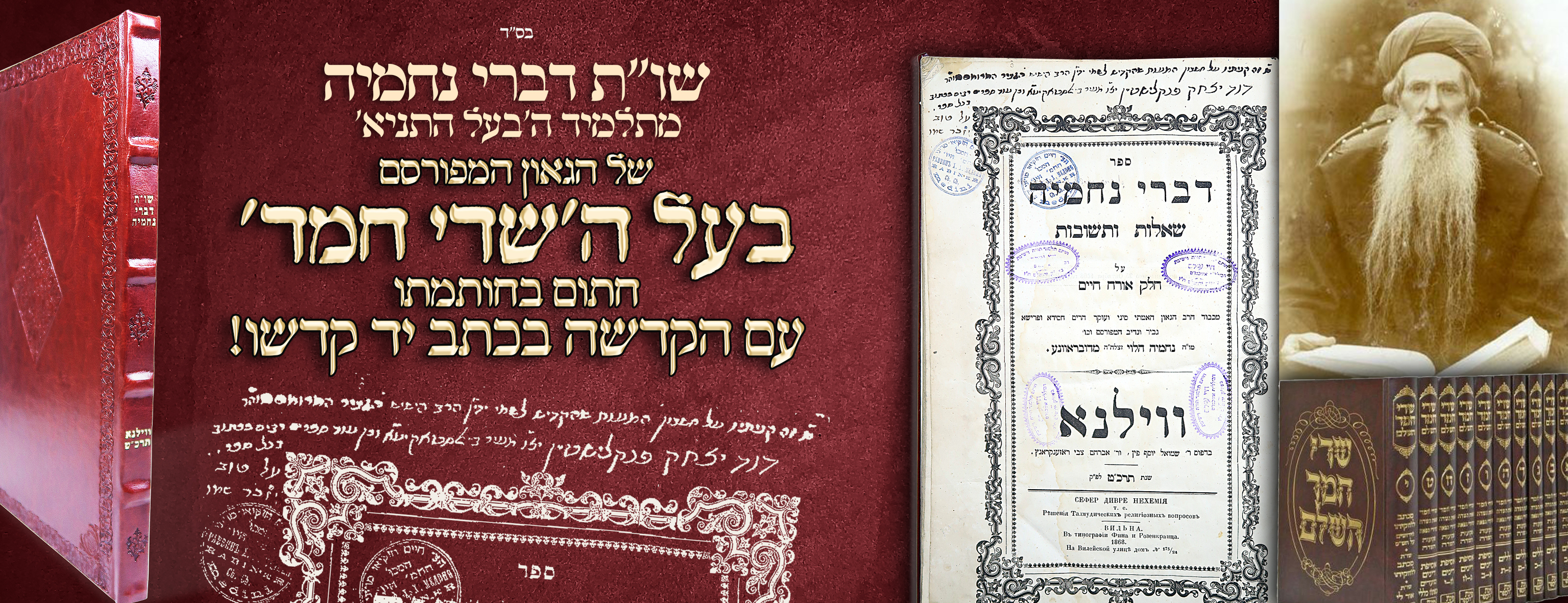
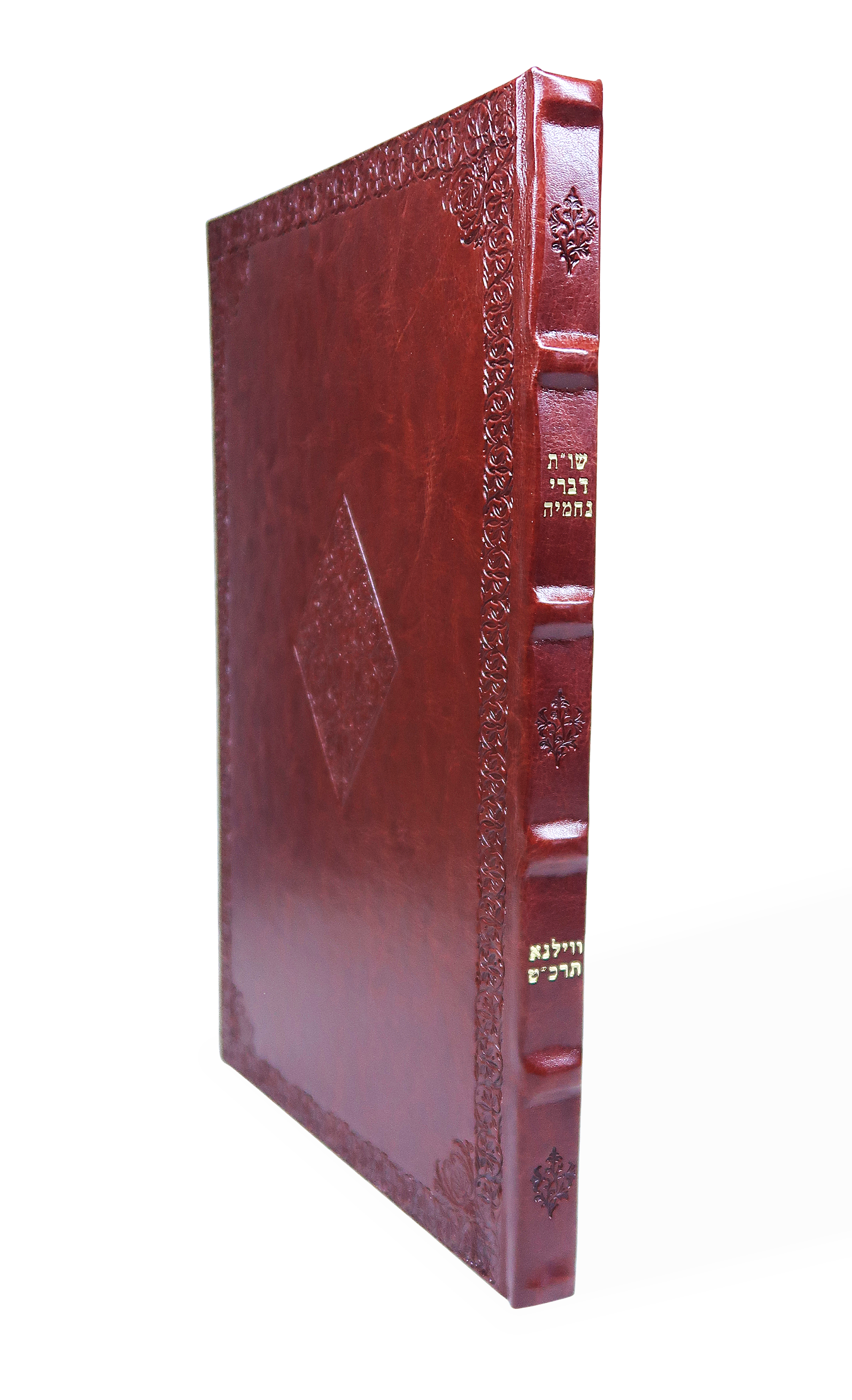
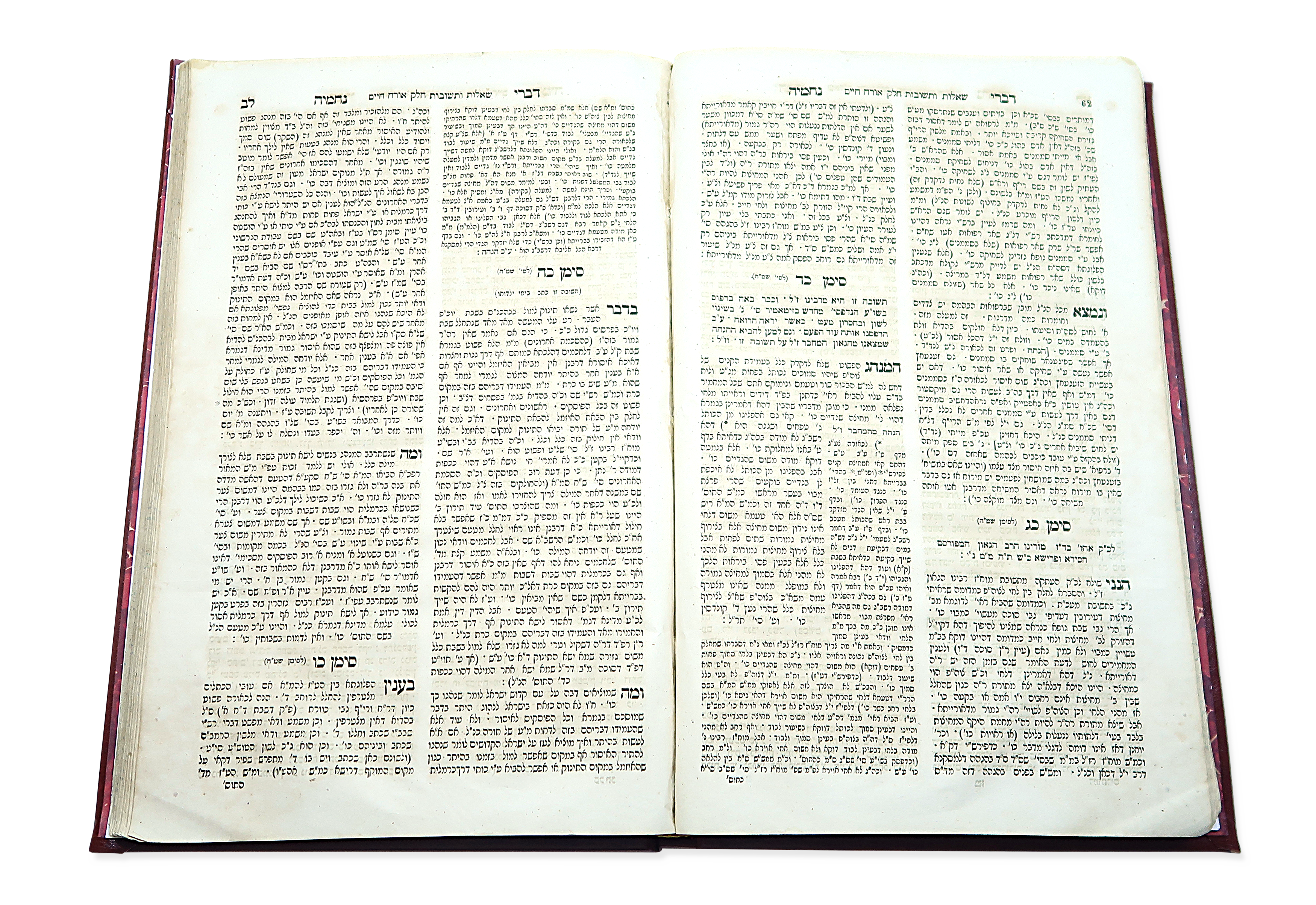
Responsa "Divrei Nechemia" Vilna 1869 – Copy of the Author of "Sdei Chemed" with a Personal Dedication in His Holy Handwriting!
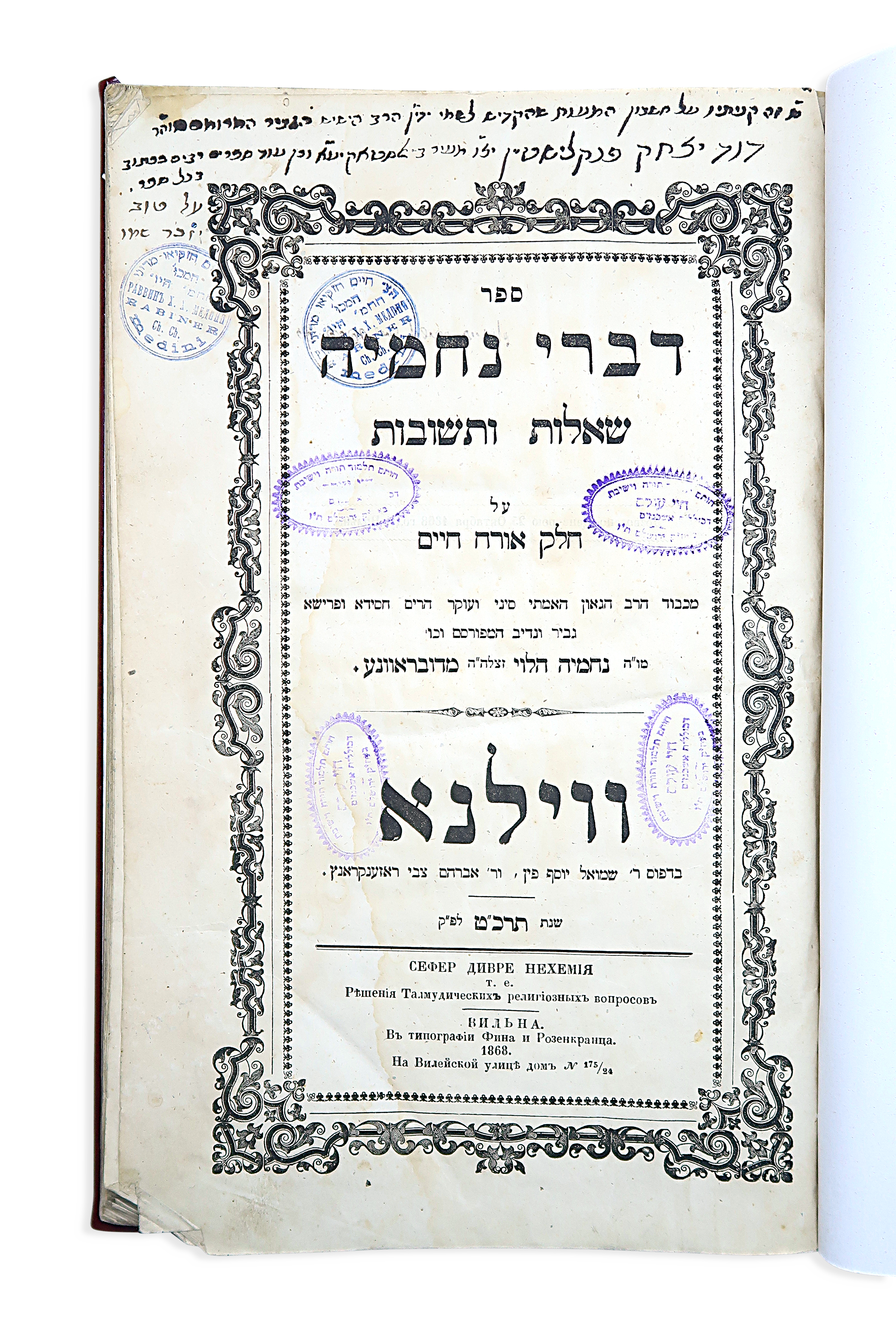
Sefer Divrei Nechemia – explanations on Shulchan Aruch HaRav and responsa on the laws of Orach Chaim, by the student of the Baal HaTanya the Gaon Rabbi Nechemia HaLevi Ginzburg of Dubrovna, Vilna 1869 – copy belonging to the author of Sdei Chemed, with a personal dedication in his holy handwriting!
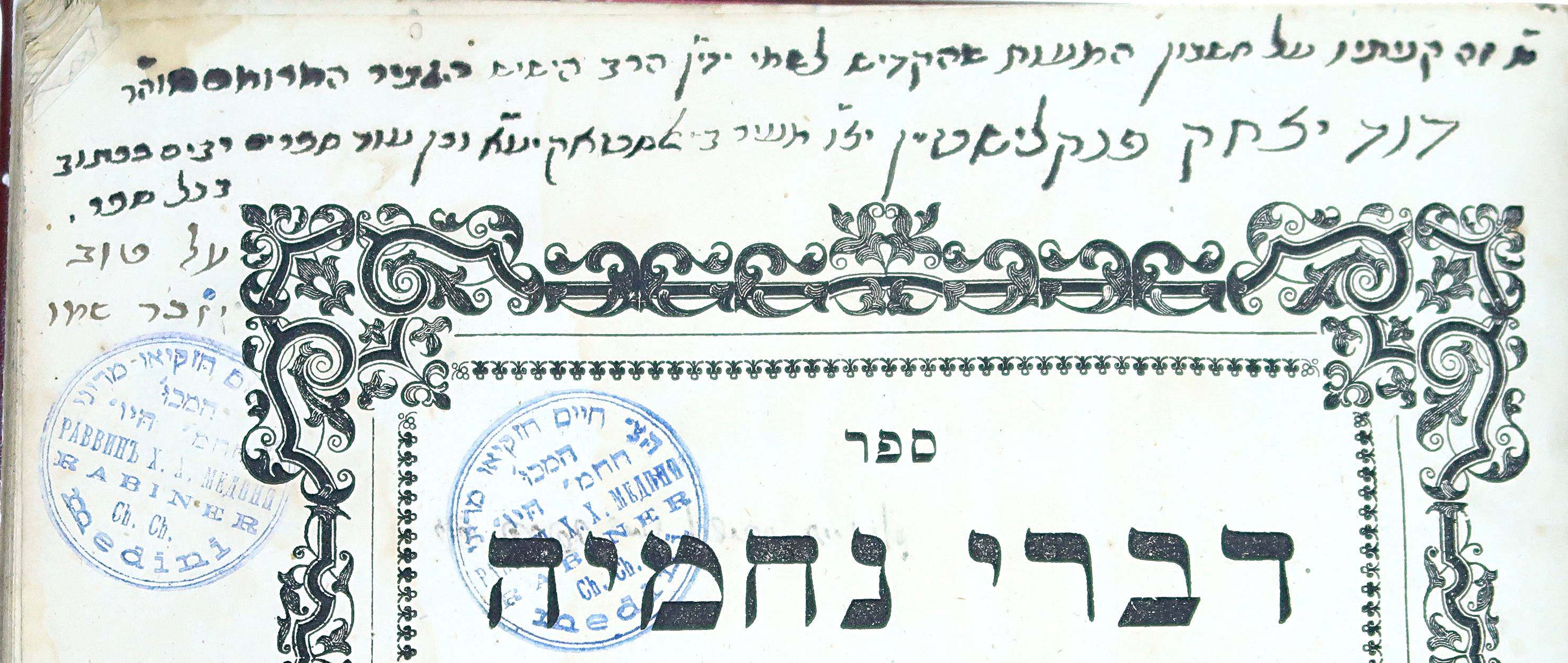
On the title page, the renowned Gaon Rabbi Chaim Chizkiyahu Medini, author of Sdei Chemed, inscribed a personal dedication in his holy handwriting:
"…This sefer I purchased with the funds donated in my name by the venerable and esteemed rabbi, the elder and wealthy man, our teacher Rabbi David Yitzchak Finkelstein, may he live long, from the city of Bialystok, and so too for many other seforim, as noted in each sefer, may his name be remembered for good…" (With the seal of Sdei Chemed*).
Very good condition, with minor text missing on page 47 due to a printing error, a small tear at the margins of the second title page, slight wear and stains, and a new, beautiful binding.
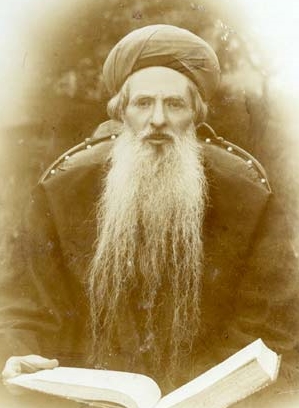
Rabbi Chaim Chizkiyahu Medini, author of Sdei Chemed, was born on the 7th of Cheshvan 1832 in Jerusalem. From a young age, he studied diligently with his father and became known for his dedication to learning. He supported his mother and family, and following the advice of Rabbi Chaim Nissim Abulafia, he moved with his family to Constantinople to live with relatives on his mother’s side, allowing him to continue his studies without financial worries. He studied extensively at a yeshiva funded by the wealthy Chaim Israel Romano. Despite being falsely accused by a jealous student, Rabbi Medini chose to remain silent and not expose the plot, earning divine favor, which led to the writing of his monumental work, Sdei Chemed.
Over the years, he faced illness and financial difficulties, yet he became renowned for his Torah scholarship, particularly after publishing his work Michtav LeChizkiyahu in 1865. In 1867, he became the chief rabbi of Karasu-Bazar (modern-day Bilohirsk) in Crimea, where he worked to prevent Jews from assimilating into the Karaite community, correcting strange customs and instituting religious reforms. He also founded a yeshiva and focused on educating both the young and old in his community.
Rabbi Medini declined offers to serve as a dayan in Constantinople, preferring to continue his Torah studies. He was known for his humility, preferring to avoid public recognition and refusing additional pay, even for the wedding of his daughter.
In 1870, Rabbi Medini visited the Land of Israel and upon his return brought with him soil from the Holy Land, instructing that if he were not buried in Israel, the soil should be scattered over his body. In 1879, he published Bakkashot, a collection of poems, and his fame as a Torah authority spread far and wide.
In 1899, Rabbi Medini returned to Israel, settling in Hebron, where he became the Chacham Bashi and Av Beit Din. He worked to improve religious education and founded charitable institutions. He passed away in 1904 and was buried in Hebron. A year and a half after his passing, his grave was discovered open, but his body remained intact, a testament to his saintly life.