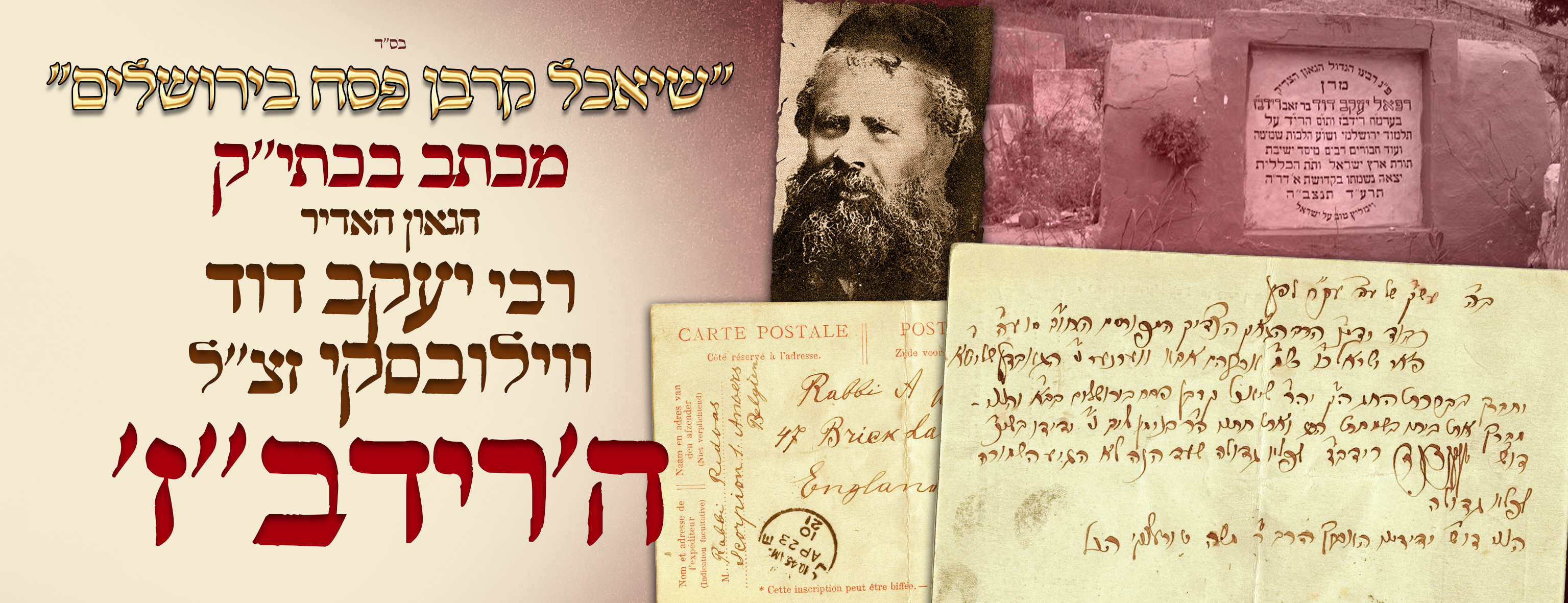
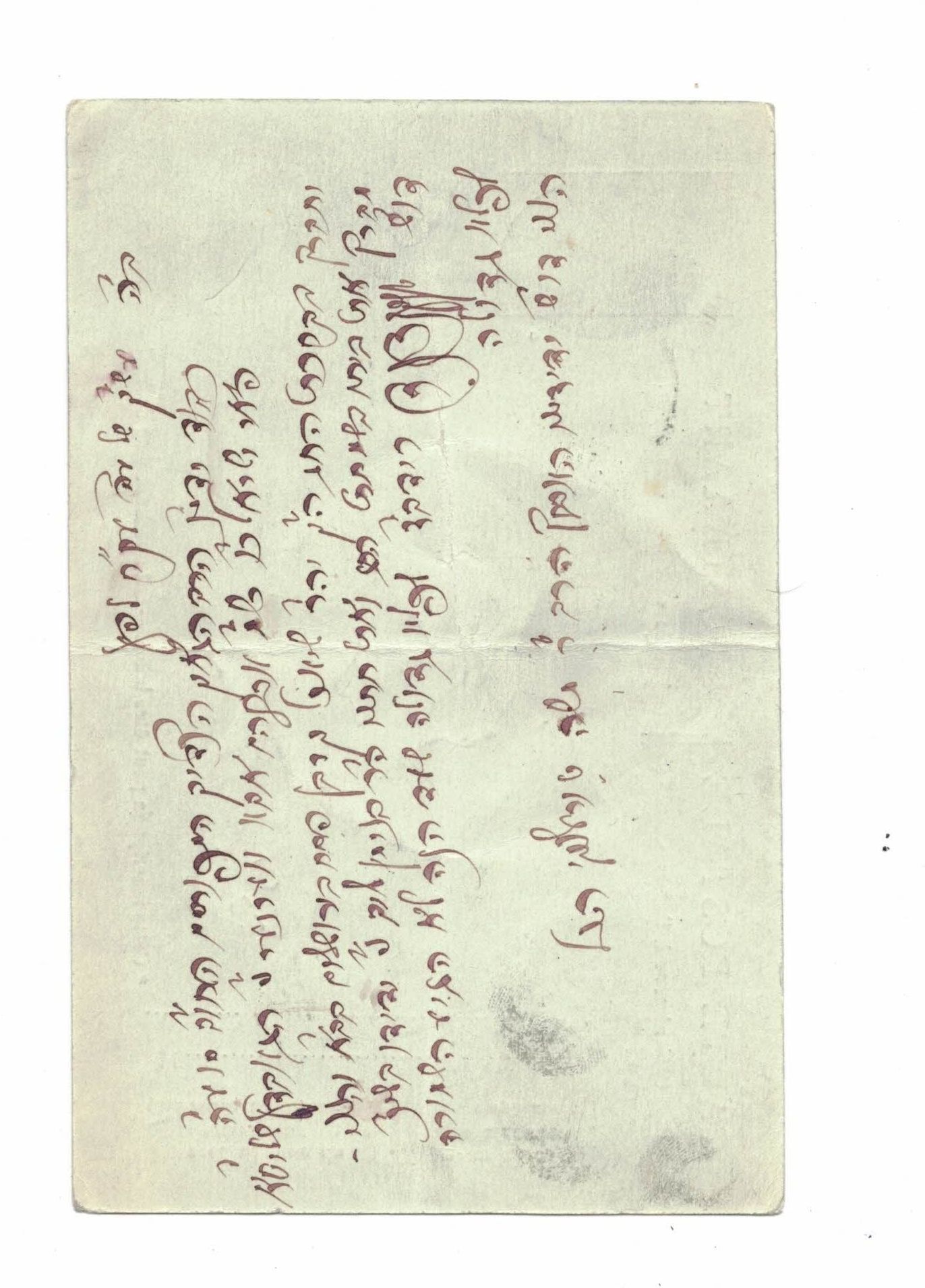
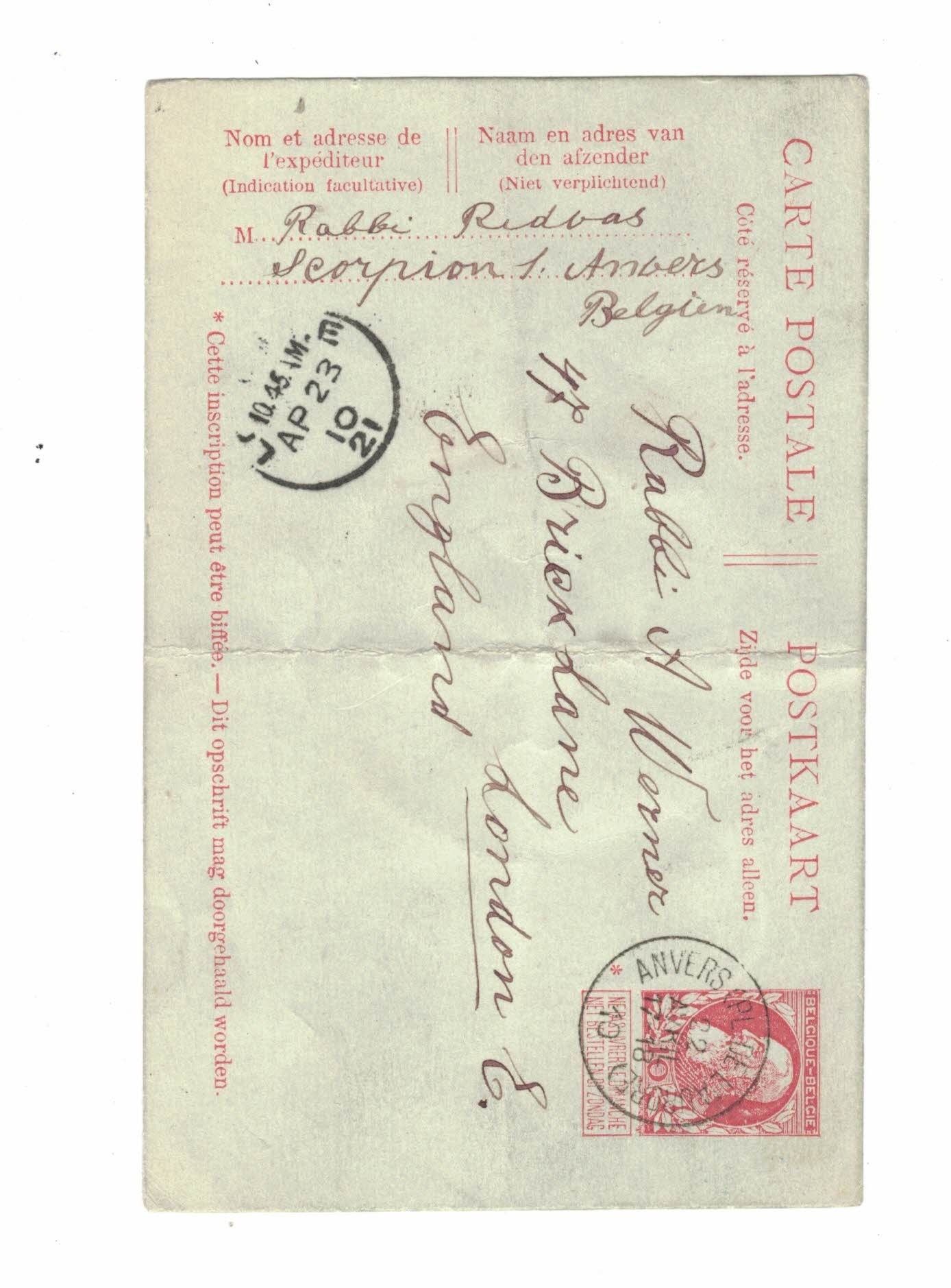
"May it be His will that we eat the Passover sacrifice in Jerusalem speedily in our days". A letter written entirely in the holy handwriting of the great Gaon, Rabbi Raphael Yaakov David Willovsky, the Ridbaz Zt”l.
"…To the honorable dear friend of mine, the righteous and renowned scholar, Rabbi Avraham Abba Werner, the esteemed Av Beit Din [Rabbi of Finland, 1837–1913]." "..
.May you be blessed with the holy festival’s blessings, may it be His will that you eat the Passover sacrifice in Jerusalem speedily in our days, and I bless your household with joy…"
************************************
The great genius Rabbi Raphael Yaakov David Willovsky Zt”l, known as the Ridbaz, was born in Kobrine, Grodno district, on the 30th of Shevat, 1845, to his father, R’ Ze’ev Willovsky Z”l.. Even in his youth, he was known as a prodigy. At the age of 23, he was appointed as rabbi in Izabelin, and in 1871, he served as a Maggid in Vilna. In 1874, he published his sefer Migdal David. Two years later, he was appointed rabbi in Bobruisk and published his sefer Chana David..
In 1890, he was appointed as the rabbi of Slutsk, where he founded a large yeshiva and taught many students. His life’s work was the publication of the Jerusalem Talmud, along with new commentaries and analyses in the style of the Ba’alei Tosafot on the Babylonian Talmud. His goal was to
"purify the path and clarify the true way in the Jerusalem Talmud, through which all of Israel can walk."
In 1900, he traveled to America to raise funds for printing his commentary on the Jerusalem Talmud and to sell his works, dedicating Seder Nezikin to his supporters in America. In 1903, he traveled again to strengthen Judaism there. At the Philadelphia conference of the Union of Orthodox Rabbis of America, he was recognized as the "elder of the rabbis." In 1904, he was appointed rabbi of Chicago.
In 1905, he made aliyah to the Land of Israel and was appointed as the rabbi of Safed, where he founded a yeshiva called Torat Eretz Yisrael attracting around 150 students.
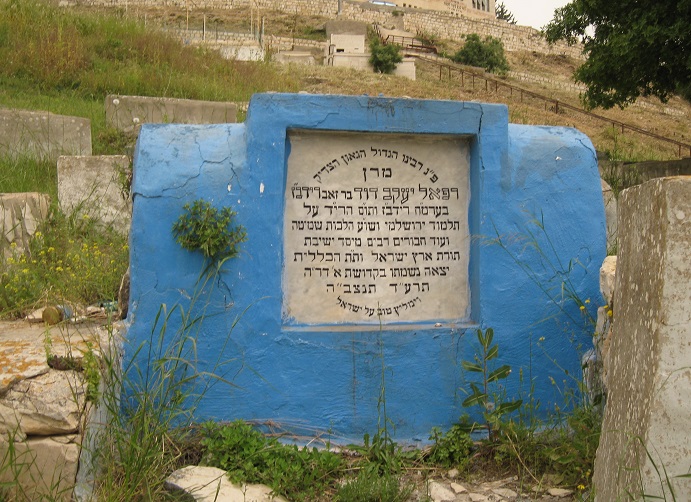
He strongly opposed the Heter Mechirah (the sale permit for Shmita year) and worked to fully restore the observance of Shmita with all its stringencies. He published a new edition of Pe’at HaShulchan by Rabbi Yisrael of Shklov, of blessed memory, adding his own commentary, detailing the challenging laws of Shmita (Jerusalem, 1912). He also established a special fund to support farmers who observed Shmita. The Ridbaz passed away on the 1st of Tishrei, 1913, and was buried in the ancient cemetery in Safed.
1 page, very good condition.